
Fondue vs Fondipping: What Is the Difference and Why It Matters
There is something romantic about the idea of a fondue party. We picture candlelight and gentle laughter around a bubbling pot. Fondue has long been associated with intimate gatherings spent hovering over warm cheese or simmering broth.
But as charming as fondue is, it comes with a very specific personality. And that personality is a little fussy.
Fondipping was born as its modern, carefree cousin.
Let us take a closer look at what truly sets these two styles of entertaining apart.
What is a Traditional Fondue Party?
A traditional fondue party is usually designed for a smaller, more intimate group. Think four to six guests, gathered close around the table. Everyone shares one or two fondue pots, and the evening moves slowly and deliberately.
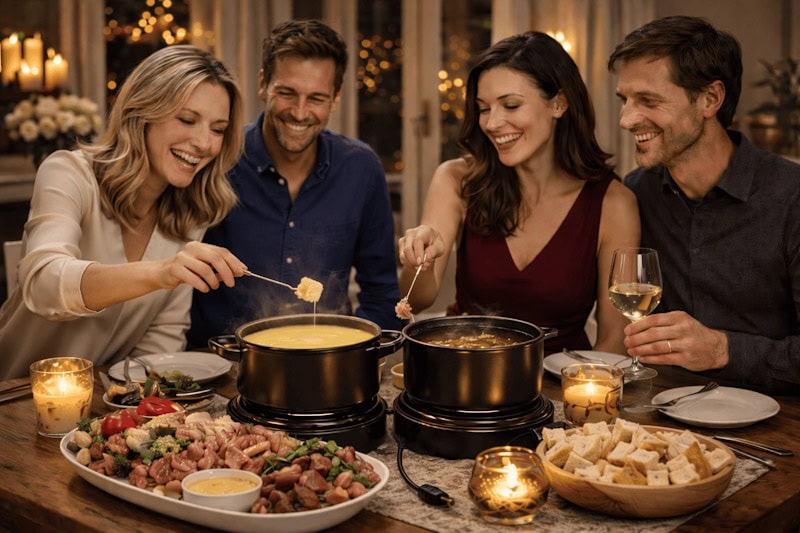
Fondue is a cooking experience.
Raw meats are often brought to the table. Guests cook their own chicken, beef, shrimp, or vegetables directly in scorching hot oil or simmering broth. Cheese fondue and chocolate fondue are also common, but the hallmark of classic fondue is that much of the meal is prepared at the table itself.
Because of this, fondue parties require constant attention. The host must manage temperatures, refill broths or oils, monitor safety, and gently guide guests through the process. It is charming, but it is also hands on, precise, and best suited for small gatherings of 4 to 6 people.
Let's face it, raw meat and electric cords or small fires can be dangerous.
What is a Fondipping Party?
A Fondipping party is built for modern life, real kitchens, and real friendships.
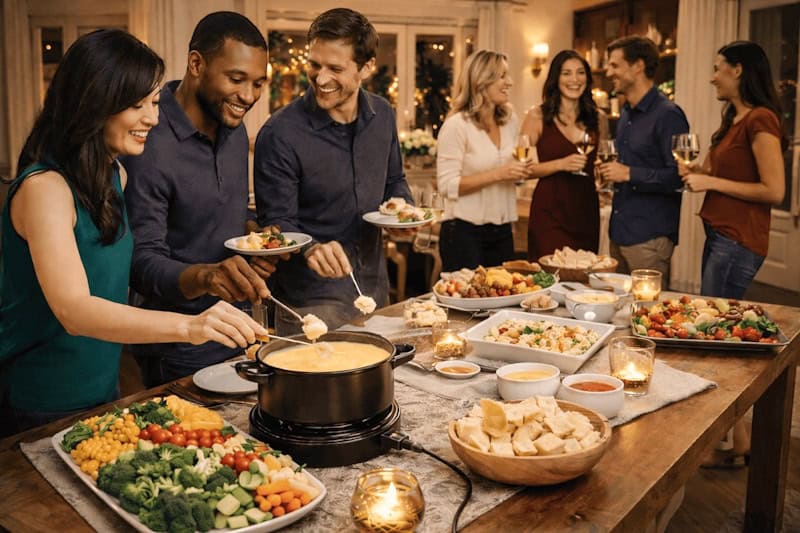
In a Fondipping gathering, all of the cooking is done ahead of time. There is no raw meat at the table. There is no oil bubbling near sleeves and scarves. There is no worry about food safety or timing.
Fondipping centers on one or two beautiful main dipping pots that stay out for the heart of the gathering. There may be a warm cheese fondue, a savory sauce pot like a creamy korma for skewered chicken, or a bisque style dip served with bread.
Cooked meats, vegetables, and breads are prepared ahead of time and arranged for easy dipping, while both warm and cold sauces fill the table. Everything is ready when guests arrive, allowing the host to step away from the kitchen and into the conversation.
Guests can move freely. They can mingle, laugh and snack throughout the party. They can come back for seconds and thirds without waiting their turn at a single pot.
And most importantly, the host is not tied to the stove.
She is laughing, sipping, and actually enjoying her own party.
The Real Difference
Fondue is about cooking together.
Fondipping is about gathering together.
Fondue is intimate, structured, and slow.
Fondipping is relaxed, flexible, and generous.
Fondue asks your guests to participate in making the meal.
Fondipping invites your guests to simply enjoy it.
And while both have their place, Fondipping was created for the way we really live now. Larger guest lists. Easier prep. Beautiful spreads. Zero stress.
For Those Who Are Fond of Dipping
Fondipping is not replacing fondue.
It is freeing it.
A Little Fondue. A Lot of Dipping.
And finally, a party where the host gets to enjoy the party too.